

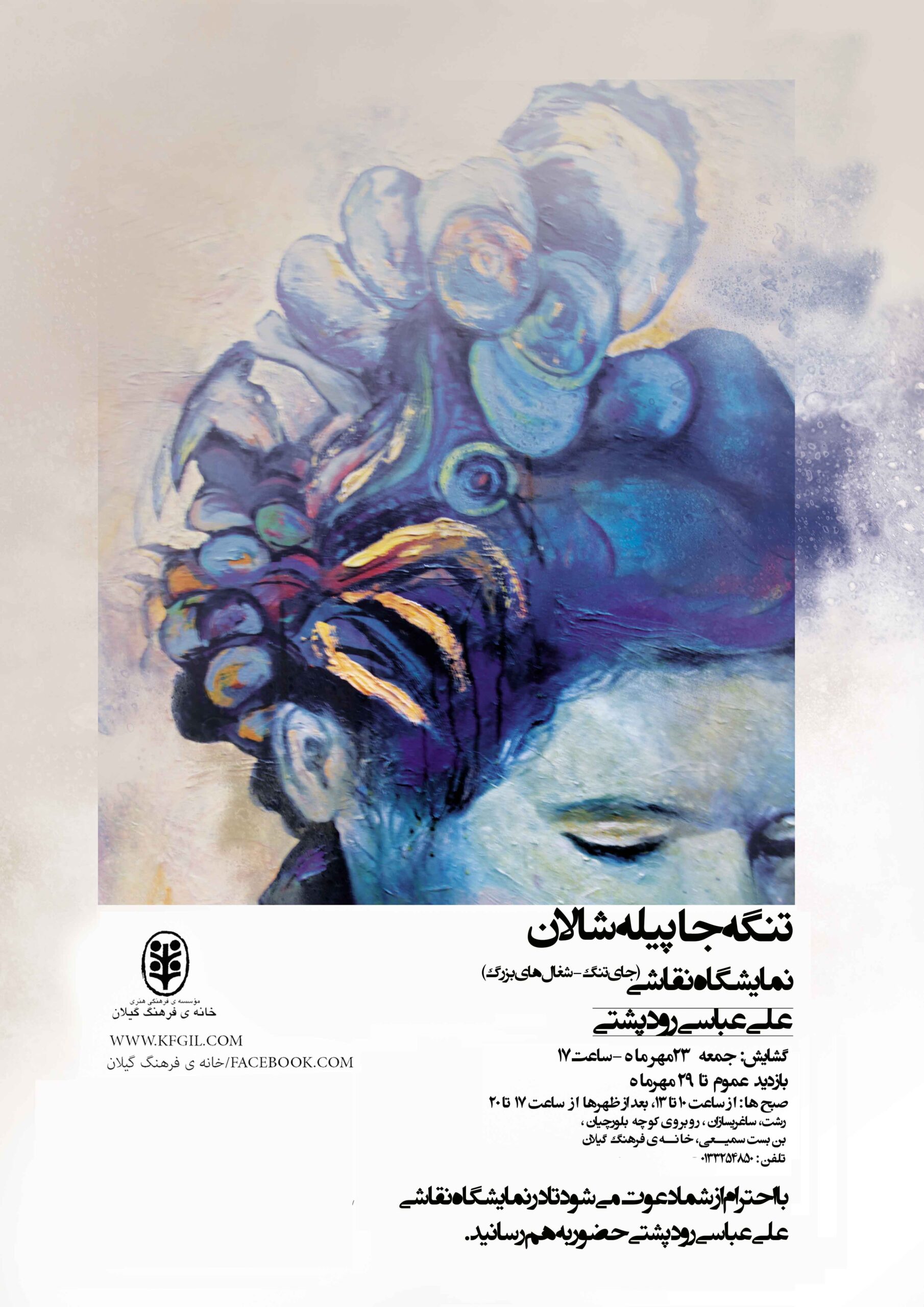
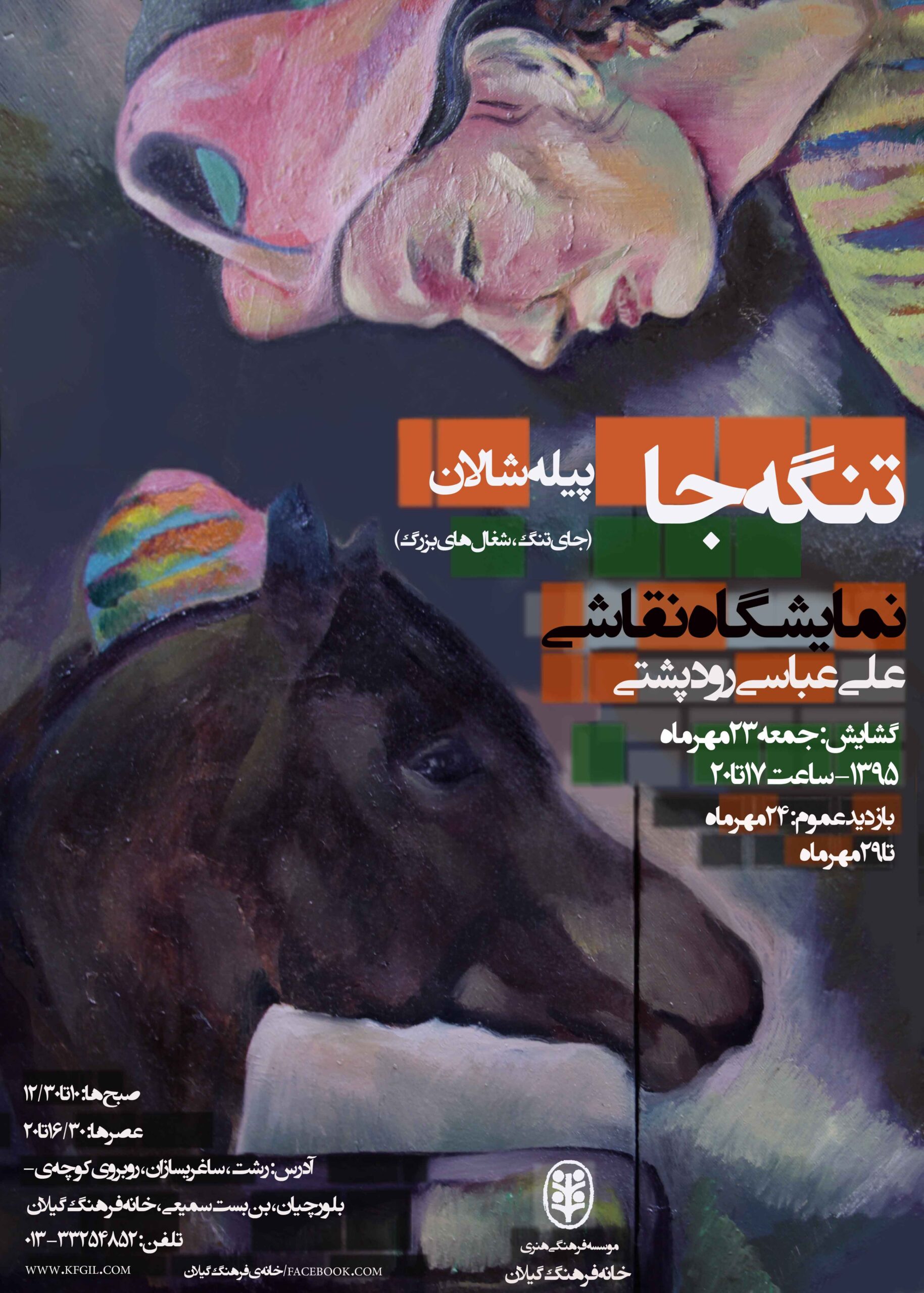
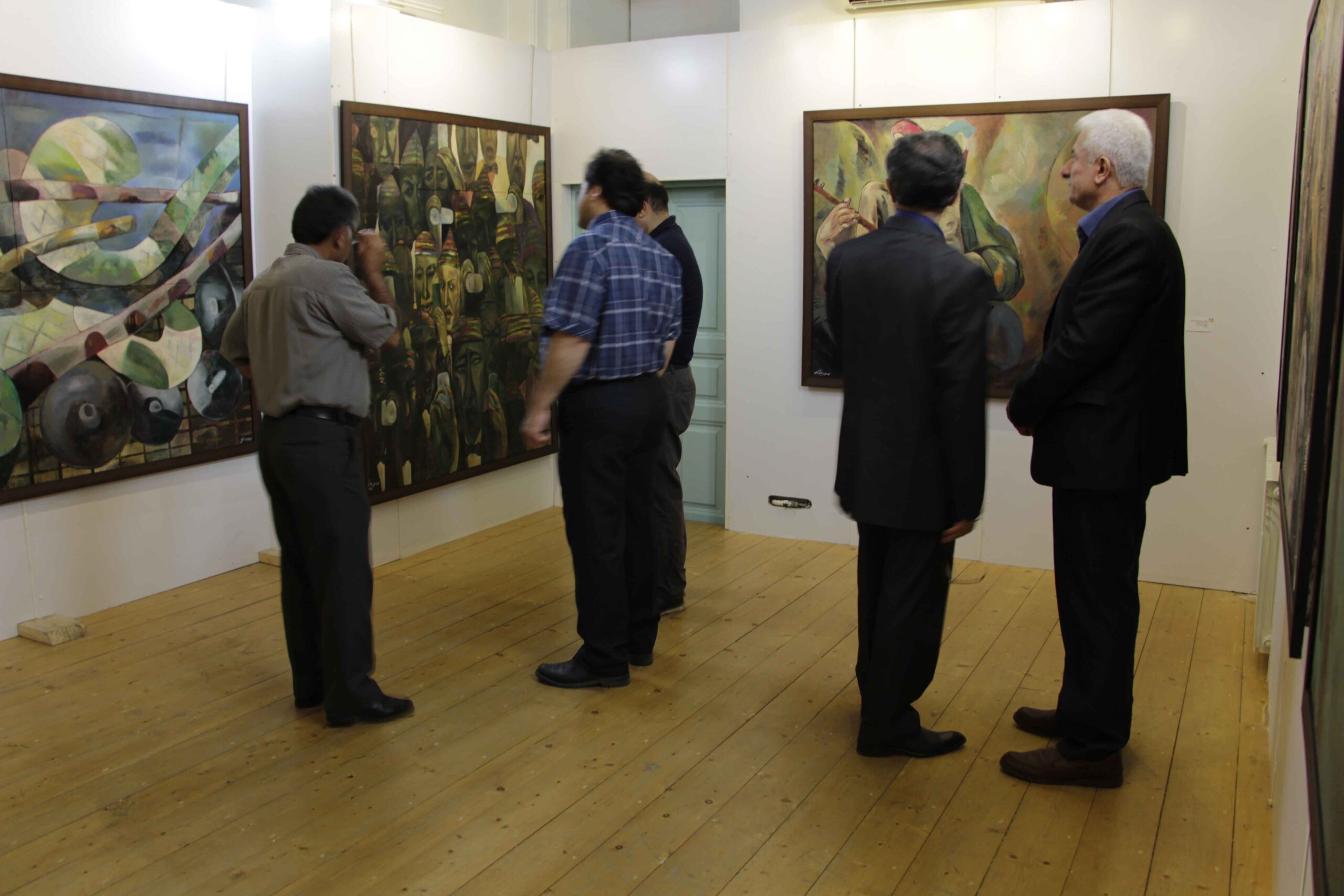
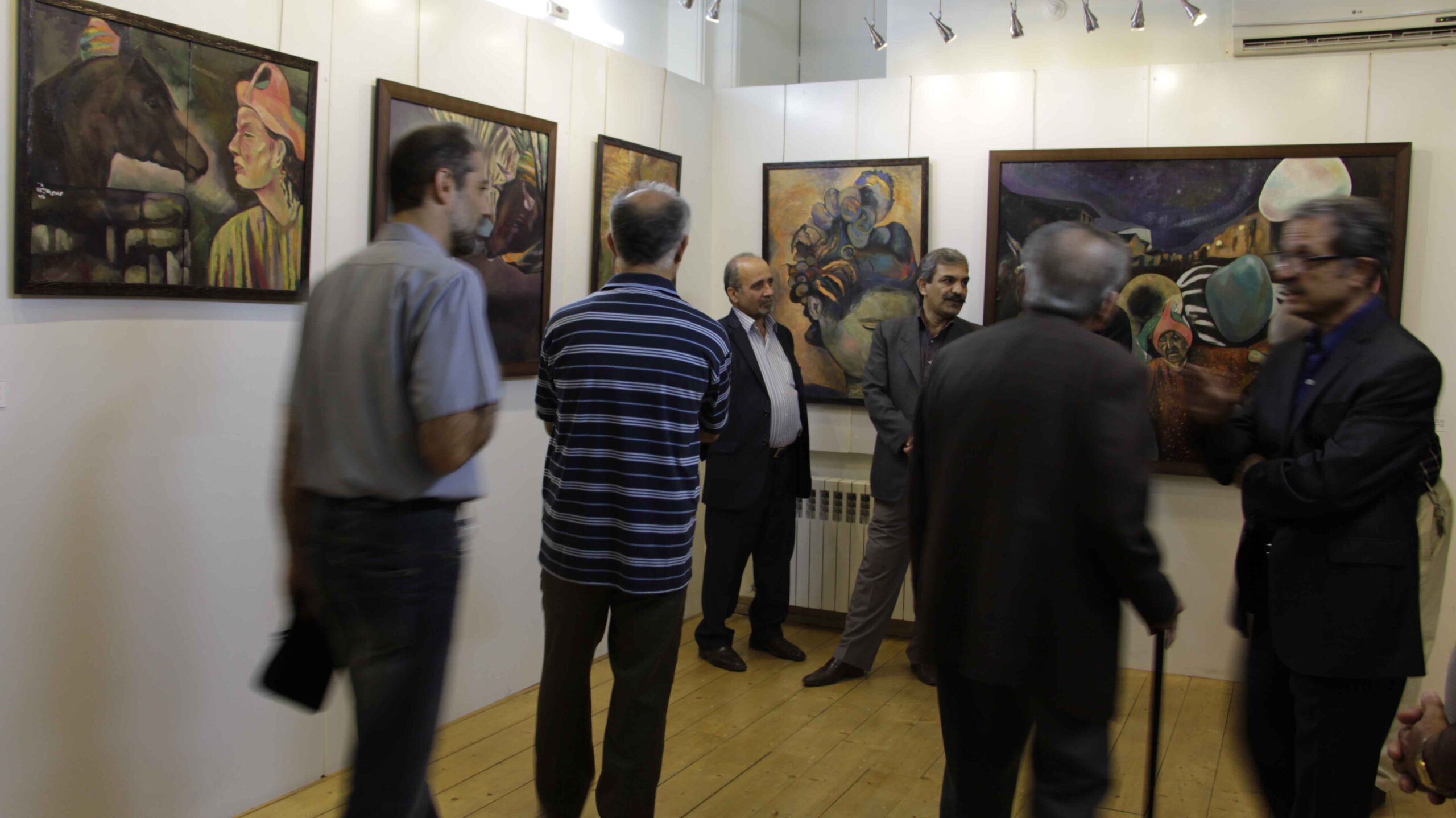
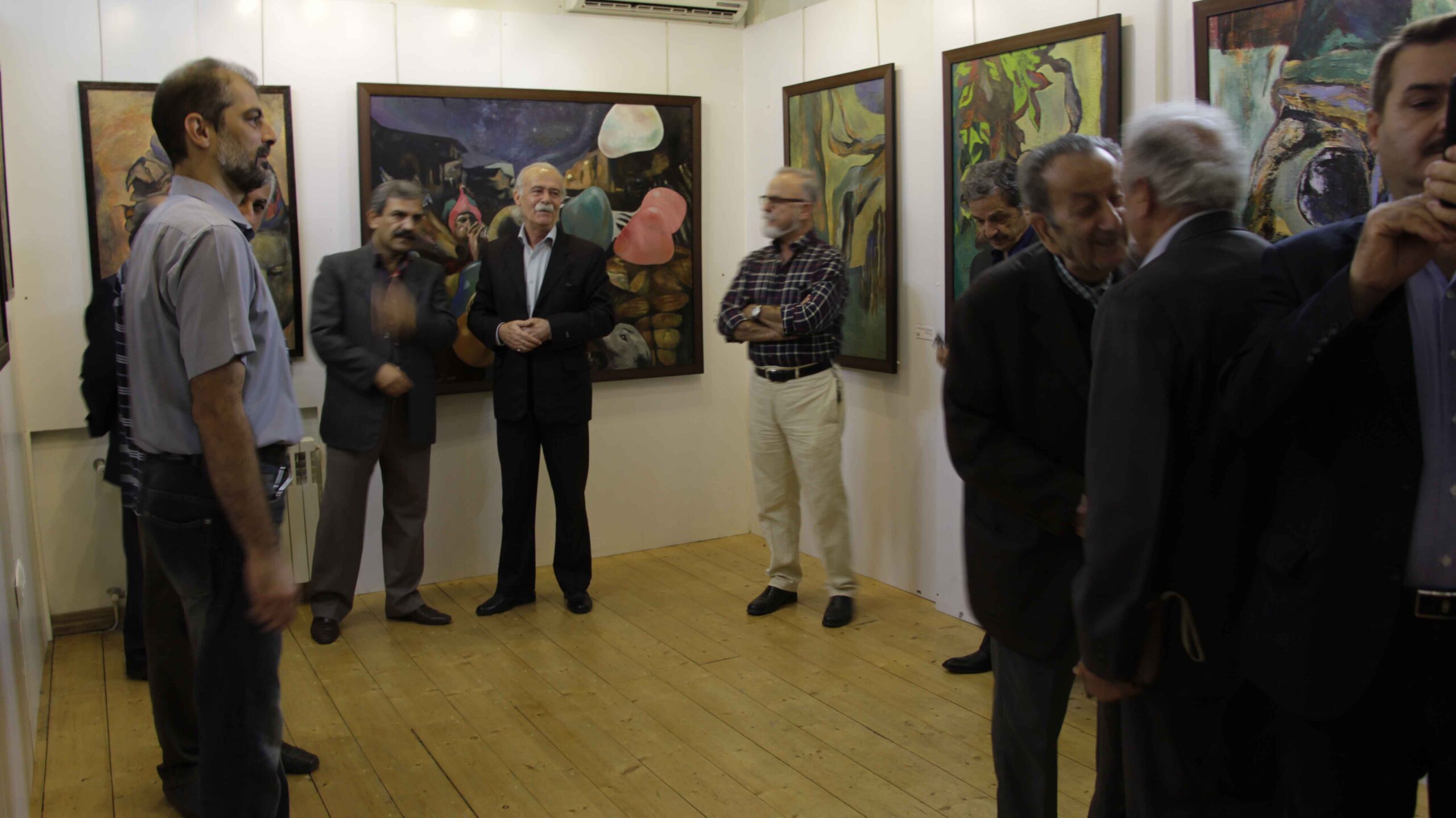
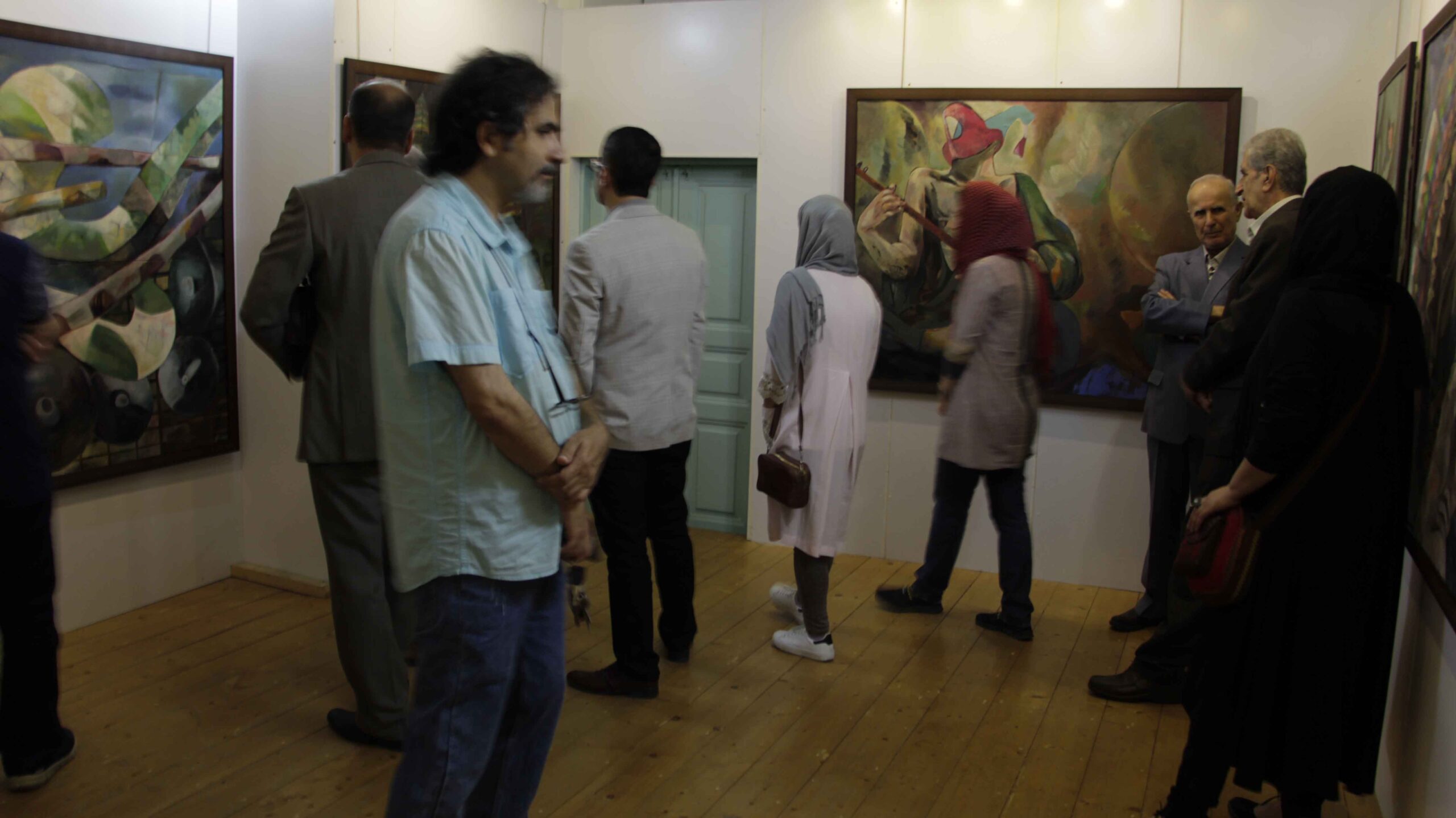
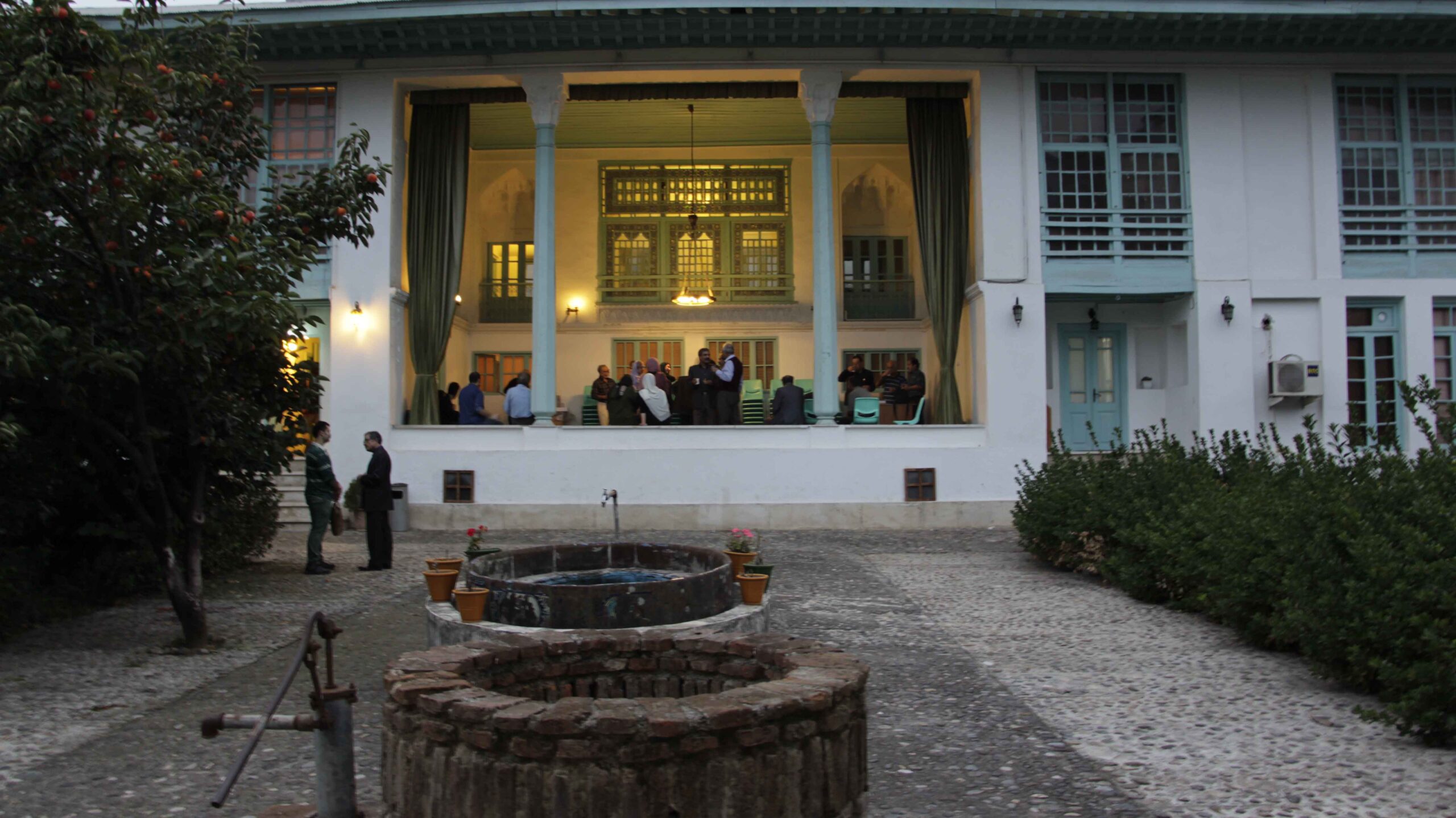
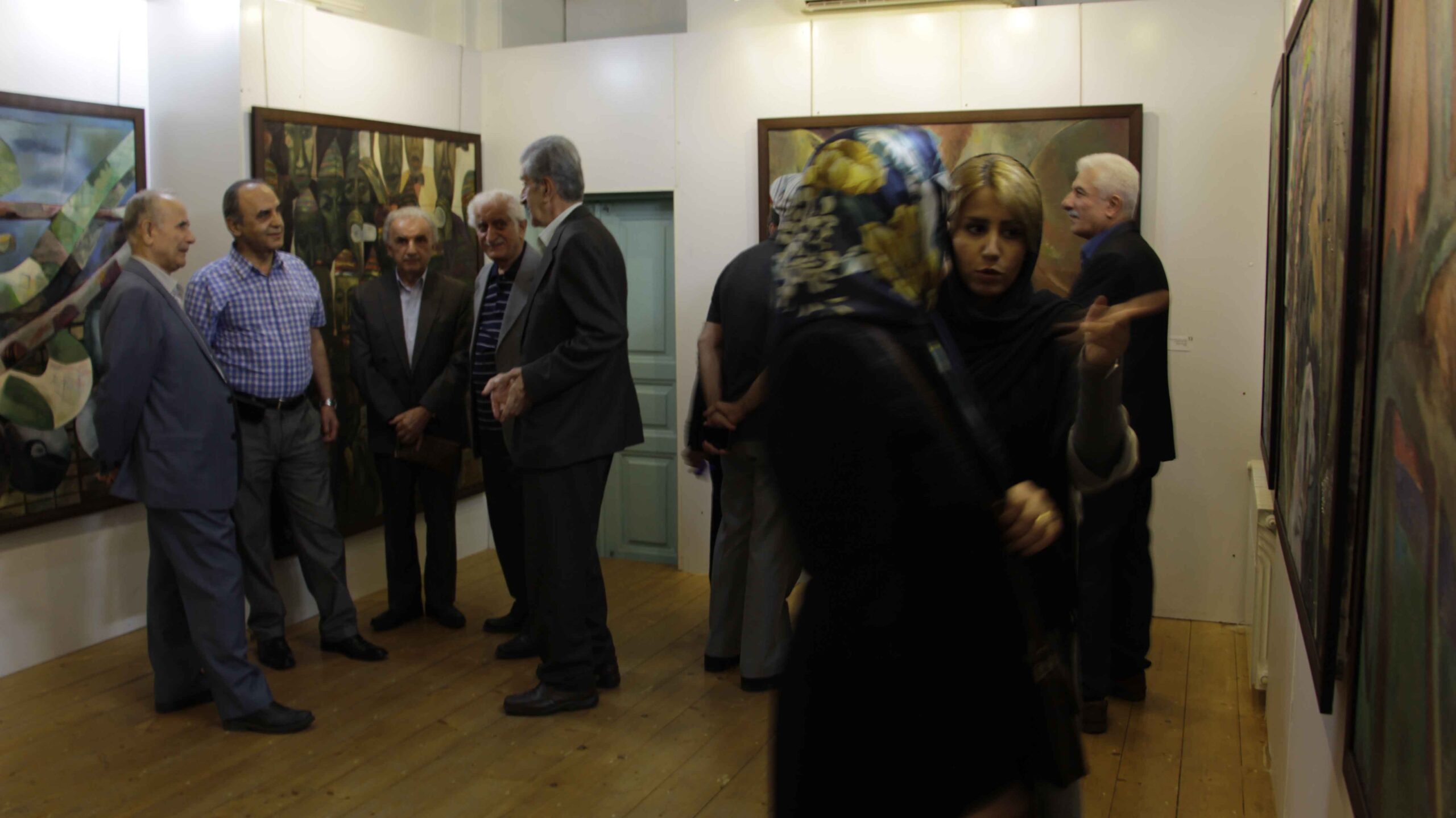
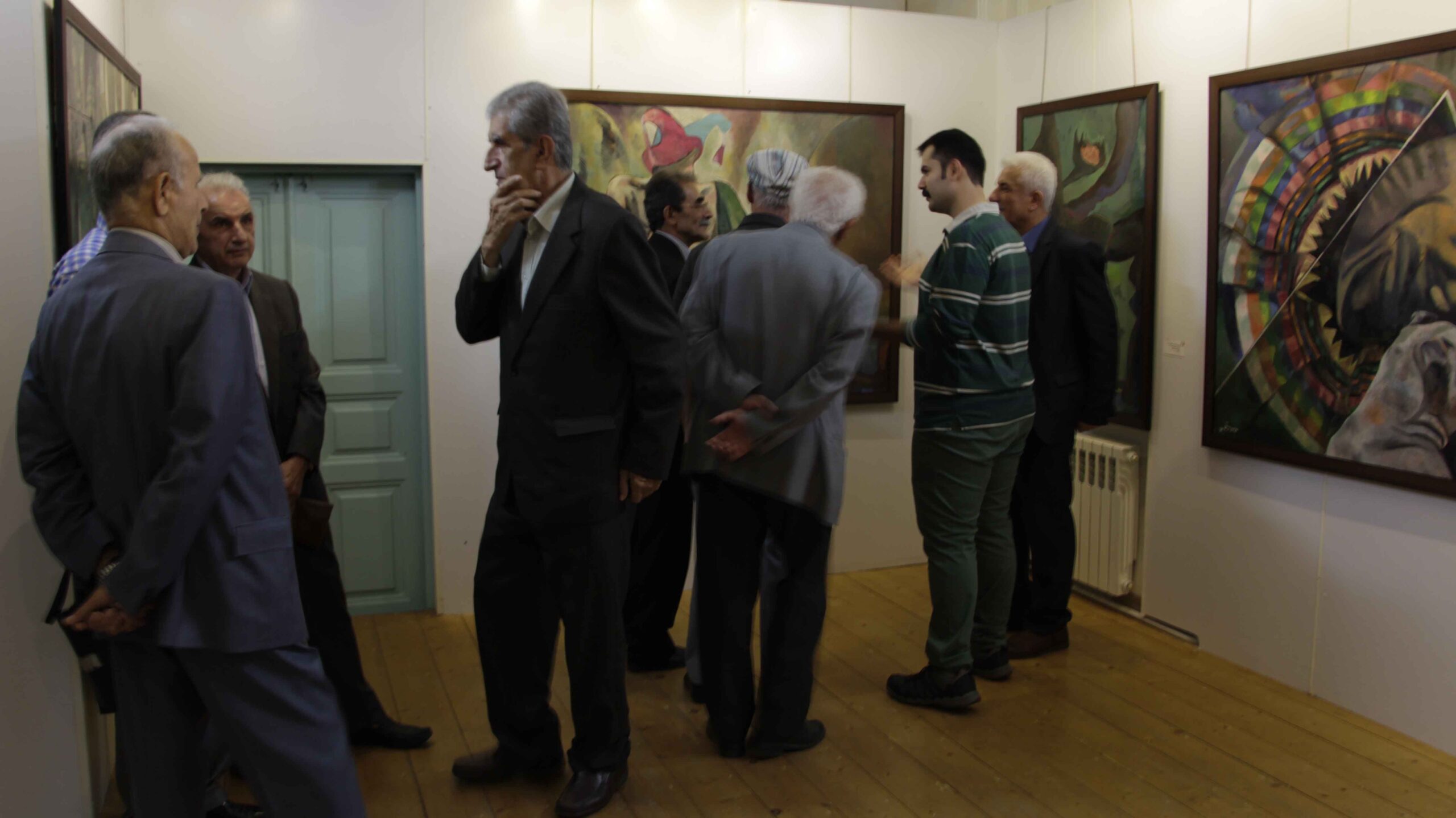
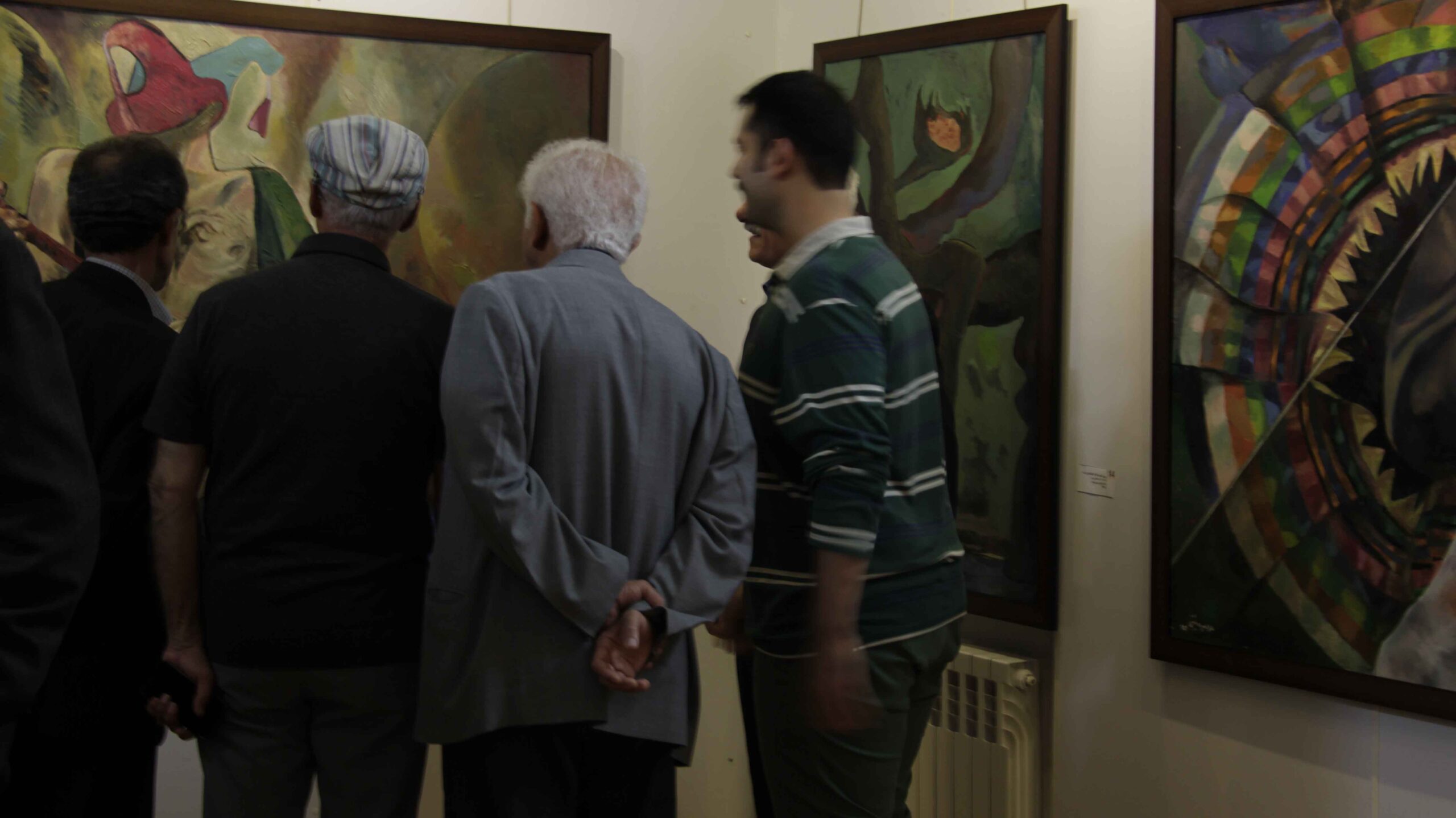
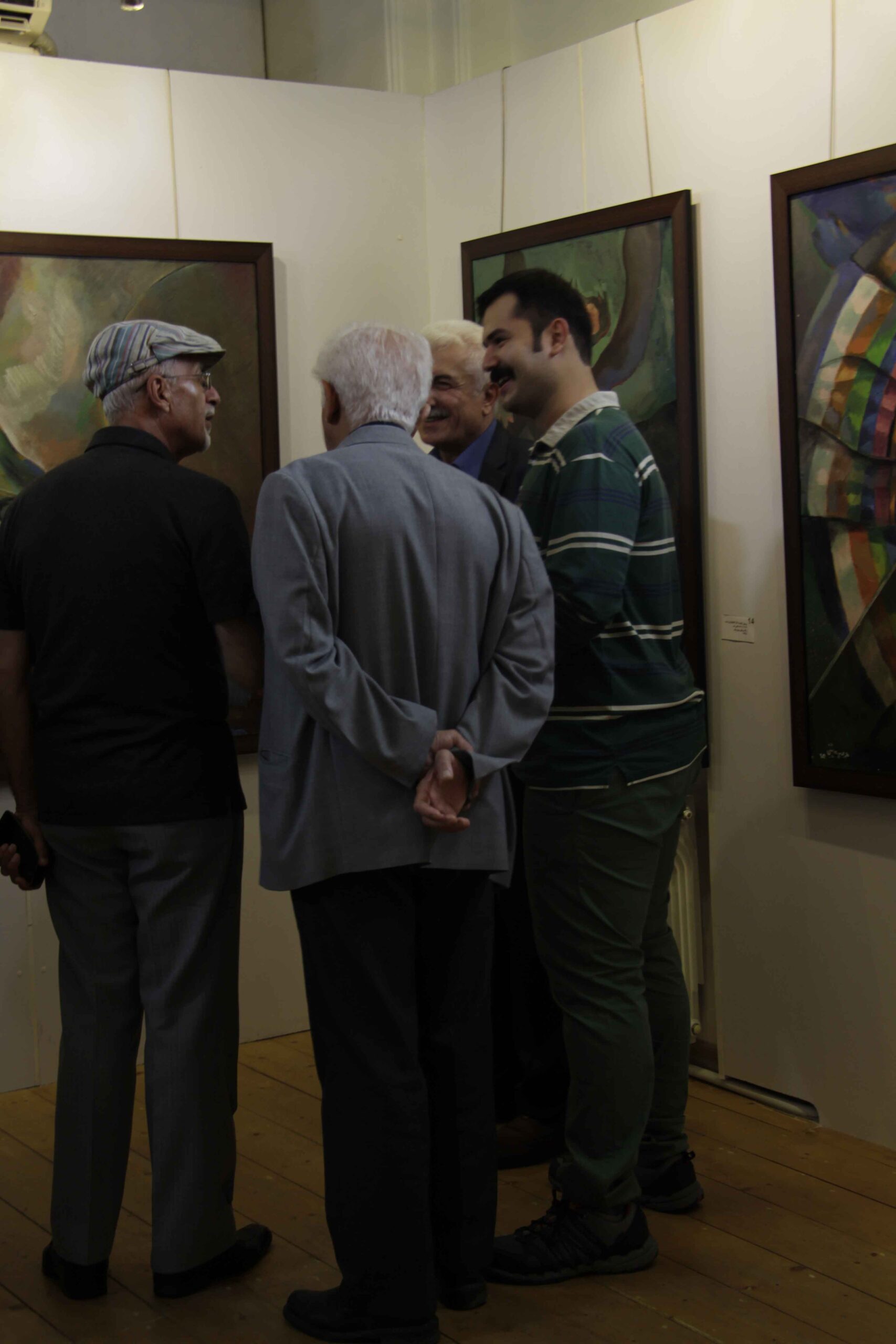
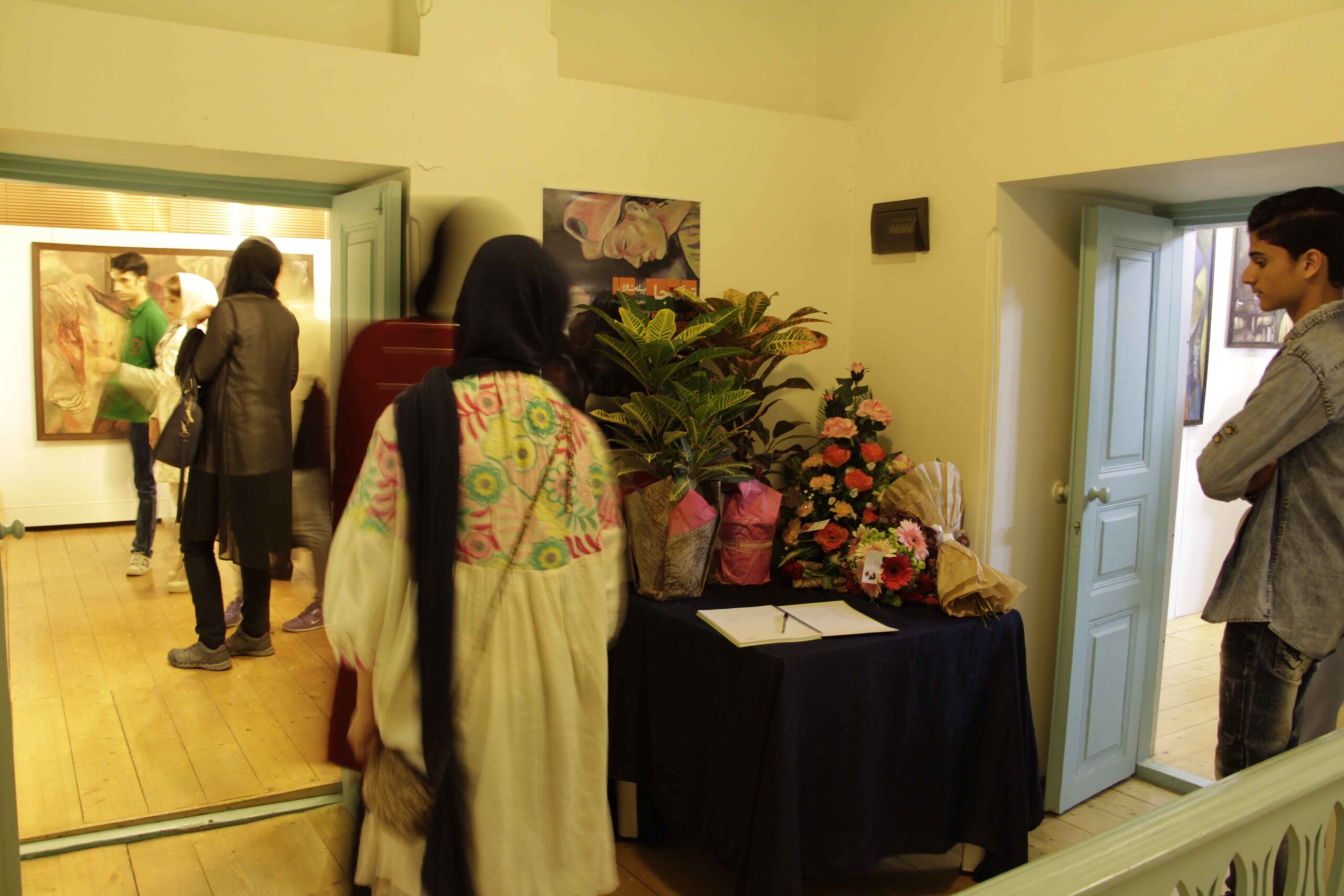
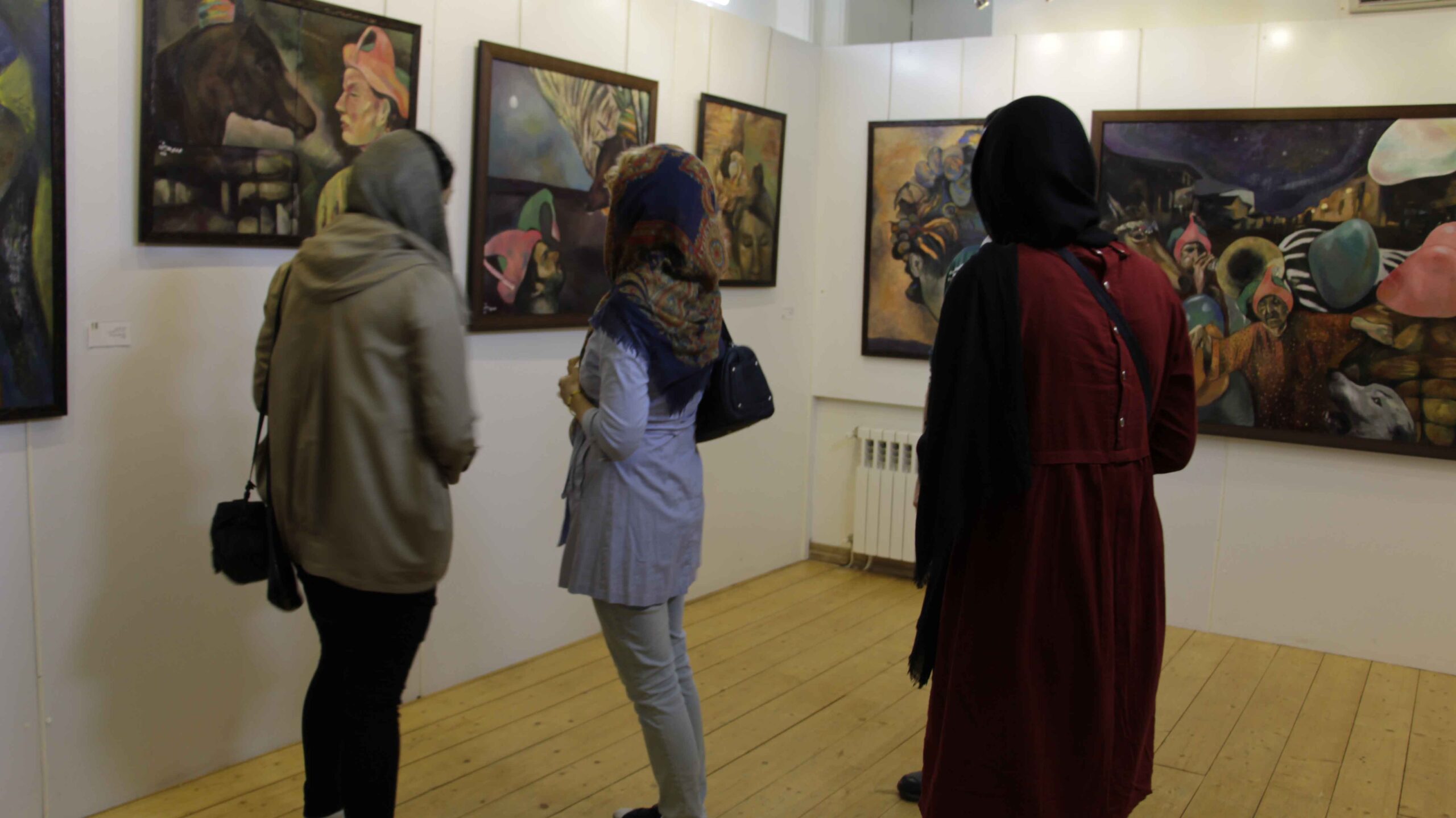
Nocturnal Images of the Apocalyptic World (Solo Painting Exhibition – KFGIL Gallery – 2016)
Leibniz wonders: Why do things exist instead of not being existed?
This simple existential question has occupied many thinkers in the history of Western thought. Finding out the meaning of the world and how to comprehend and perceive it. Although, in traditional Iranian thinking, clear traces of this type of contradiction can be observed, in the last century it has become more intense and has involved the Iranian society in various fields of science and arts.
Trying to discover the mystery of the world, revealing the depths, re-creating values, and searching for new fields for the excavation of consciousness are the main tools for practitioners in the field of art and culture. In such a field full of ups and downs, the young and promising painter, Ali Abbasi with His first solo painting exhibition has presented his pictures. With bold artworks in relatively large dimensions. These works have a special rhetorical feature. Grabbing all available facilities, including order and Syntax of expression, grammatical and semantic possibilities (form-meaning), in other words, the principle of organizing the visual art in form-substance links that its creation is based on a special view of individual truth.
A compressed truth from a crowd full of people, plants, and animals, from a historical event to a tangled Erotic plant. Shortness of breath, a compact composition of portraits, all in gray tonality, Erosion, unevenness, and hopelessness have been implemented. Painter illustrates humans in a gray frame filled with texture in a heavy atmosphere.
A human is thrown into the stagnant path of life, the stagnation of existence active forces that slowly walk the path of life. Dark compression and contraction like a parametric element is always continuous throughout the painter’s works. In this continuation with the silent commotion of form and color, dark shades, and editorial intervention of the painter on nature, one wonders in this commotion what’s going on. What is going on there in a closed frame?
The painter of these works did not call us for pleasure and ornamentation entertainment. His world is apocalyptic, a world full of questions and resembling Khayyam’s unknowns, and surprises. It is as if the painter is standing in the frame like his characters and looks around in shock and fear. Existence surrounded him like a dense, unknown, and aimless night dream.
The painter is looking for confirmation of life. But life and the question of it can be exotic, since doubting a subject that has not been ambiguous in its meaning until recently, seems vague now.
We are in the era of rethinking concepts and wavering measurements and values. In the meantime, themes and issues in the form of humans, plants, and animals have been displayed in the painter’s works, problematic themes that have become signs in paintings. Signs that ask the value of each object, each thought, each form among the dense mass of human achievement, with which criteria we should measure? What is the truth?
Mohsen Nematkhah
November 2016
تصاویر شبانگاهی جهان آپوکالیپتیک
لایب نیتس با شگفتی می پرسید: چرا اشیاء به جای آنکه نباشند، هستند؟ این پرسش به ظاهر ساده ی وجودی، در تاریخ اندیشه ی غربی، اندیشمندان زیادی را به خود مشغول و فراکشیده است. چیستی جهان و هستی موجودات، نحوه ی شناخت و ادراک آن، هرچند که در سنت تفکر ایرانی ردپاهای مشخص و عیان از این قسم درگیری مشاهده می شود اما در یک سده ی اخیر، حدت و شدت بیشتری یافته و جامعه ایرانی را در حوزه های مختلف علوم و هنرها درگیر کرده است. تلاش برای از پی گشودن رمز و راز جهان، آشکار سازی ژرفناها، ارزش آفرینی دوباره، جستجو برای یافتن میدان های نوین برای حفاری آگاهی، دستمایه ی غالب دست اندرکاران حوزه ی هنر و فرهنگ است. در چنان میدان پر فراز و نشیب، نقاش جوان و خوش آتیه گیلانی، علی عباسی با اولین نمایشگاه نقاشی انفرادی خود پا به میدان گذاشته است. با آثاری جسوران هدر ابعاد نسبتاً بزرگ، این آثار از ویژگی ریتوریکی خاصی برخوردارند. چنگ انداختن به همه ی امکانات موجود اعم از نظم و نحو بیان، امکانات دستوری و معناشناختی، فرم ـ معنا، به عبارت بهتر اصل تنظیم بخش تجسمی مقتصد بر پایه ی پیوند فرم ـ درون مایه که محاسبه ی آن با نگاه خاصی از حقیقت فردی بنا شده است؛ حقیقتی فشرده از ازدحامی مملو از انسان و گیاه و حیوان، از واقعه ی تاریخی گرفته تا درهم پیچی اروتیک وار گیاه. نفس تنگی کمپوزسیونی فشرده از پرتره ها که همه و همه در تنالیته ی خاکستری با فرسایش و ناهمواری و بی فردایی به اجرا درآمده اند. نقاش انسانها را در کادر خاکستری مملو از بافت در جوی سنگین به تصویر کشیده؛ انسانی افکنده شده در مسیر راکد عمر، ایستایی نیروهای فعاله وجود که خمان خمان راه زندگی را طی می کند. فشردگی و انقباضی تیره همچون عنصری پارامتریک در سرتاسر آثار نقاش، همواره مداومت دارد. در این مداومت هیاهوی خاموش فرم و رنگ، فامهای تیره و مداخله ی ویراستارانه ی نقاش بر طبیعت، آدمی از خود میپرسد در این هیاهو چه میگذرد؟ آنجا در محدوده ی بسته کادر چه خبر است؟ قطعاً نقاش این آثار ما را به ضیافت تفرج و تفنن و تزیین فرا نخوانده است. جهان او جهان آپوکالیپتیکی است؛ جهانی مملو از پرسش و نامعلومی و شگفت زدگی خیاموار. گویی که نقاش مثل پرسوناژهایش درون کادر ایستاده و حیرت زده و هراسان به اطراف می نگرد. هستی همچون رویای شبانگاهی فشرده، نامعلوم و بی مقصد وی را دربرگرفته. نقاش در پی تایید زندگی است. اما زندگی و پرسش از آن، پرسشی نه خالی از غرابت است زیرا تردید در موضوعی که از گذشته های کهن تا همین حوالی، ابهامی در معنایش نبود، امروز مبهم به نظر میرسد. ما در دوران تزلزل سنجشها و ارزشها و بازاندیشی مفاهیم به سر می بریم. در این میان، مضامین و مساله ها در قامت انسان و گیاه و حیوان در آثار نقاش به نمایش درآمده است؛ مضامینی مساله دار که در نقاشی تبدیل به نشانه گشته اند؛ نشانه هایی که می پرسند ارزش هر شی، هر فکر، هر فُرم را در میان توده ی متراکم دستاورد بشری، با کدام معیار باید سنجید؟ حقیقت چیست؟
محسن نعمت خواه – آبان 95